
Australia year-end close checklist
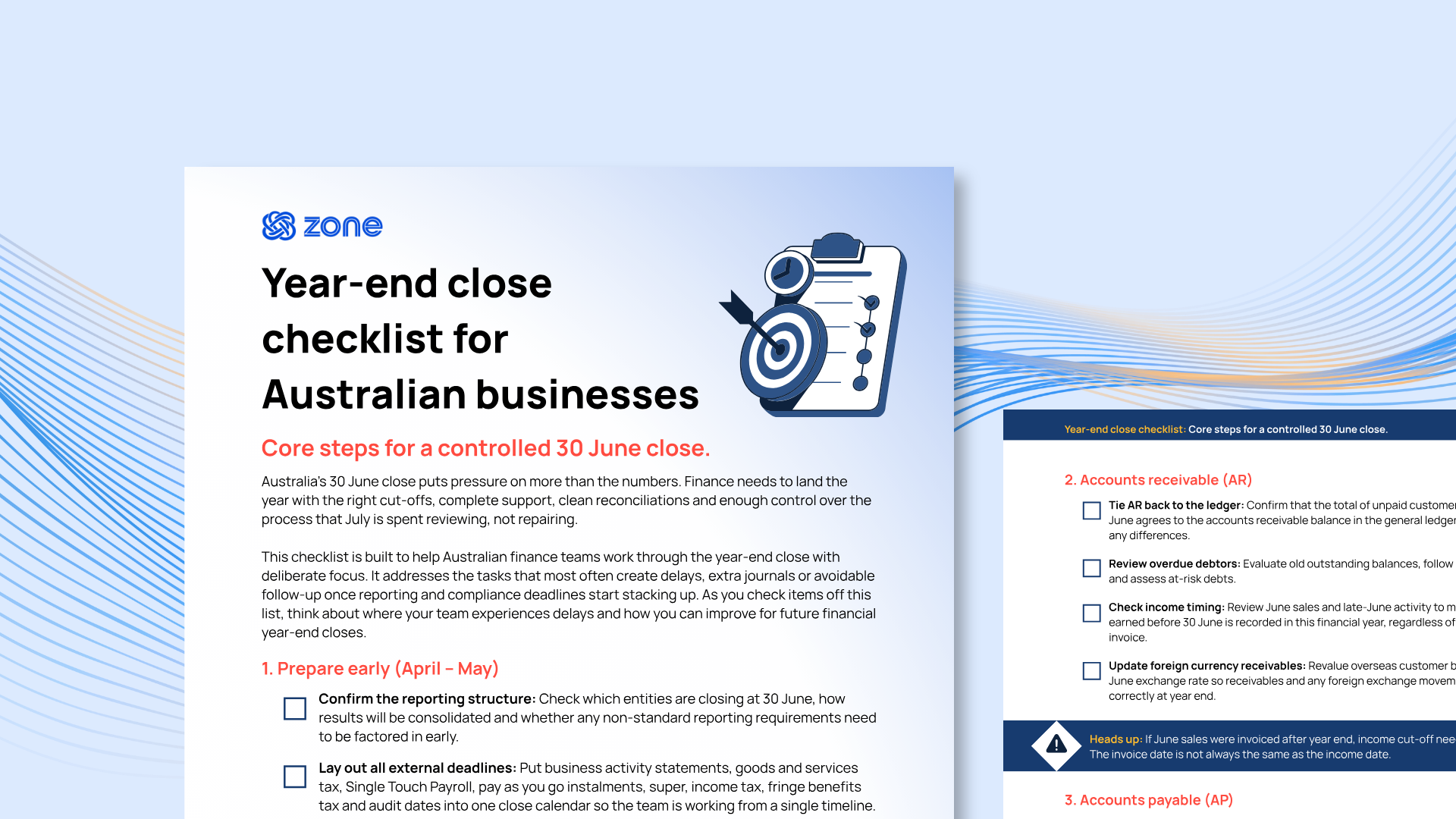
EOFY is where regular close work collides with BAS, GST, payroll reporting, super, tax and, for some teams, audit. That’s why even a capable team can feel pressure. The work is familiar, but the timing can be complex. This guide will walk Australian finance teams through all the steps needed for a smooth close and provide tips on improving processes for next year.
What is the year-end close?
For Australian businesses, the 30 June year-end close is where month-end discipline turns into year-end accountability. Items that might be tolerated during the year – old reconciling balances, late invoices or small timing differences – become much harder to carry once the file needs to support business activity statements (BAS), payroll reporting, company tax, management sign-off and, for some businesses, audit.
Australia’s year-end close is less about volume and more about control. The real question is not whether the team can get through the close, but whether the books are actually ready for review. A strong year-end financial close checklist helps teams break the close into clearer workflows, tighten ownership and surface what still needs attention before sign-off.
Key dates and regulatory considerations
In Australia, the financial year runs from 1 July to 30 June. Year-end close is the point where the business moves from monthly reporting discipline to year-end accountability. But other filing and reporting dates can interfere with a smooth financial close.
Key dates to plan around include:
- 30 June: End of the financial year.
- 14 July: Single Touch Payroll (STP) finalisation deadline for most employers. Some closely held payee arrangements follow different timing.
- 28 July: Quarter 4 BAS due date for quarterly lodgers, with possible extensions in some online or agent-lodged cases.
- 21 May or 25 June: Fringe Benefits Tax (FBT) return timing, depending on how the return is lodged. The FBT year itself runs from 1 April to 31 March.
- Company tax return deadlines: These vary by client type and lodgment method, including whether a registered tax agent is involved.
Why year-end close becomes harder than it needs to be
Financial year-end close for Australian businesses becomes difficult when small errors cascade into larger issues and what was swept under the rug during the financial year now comes to light.
That’s why the end of year often feels heavier than it should. Teams aren’t just closing the year. They’re absorbing months of minor process debt all at once. And the closer the team gets to 30 June, the more expensive each loose end becomes.
Common sources of pressure include:
- Late inputs hit the close sequence: Expense claims, approvals and accrual support are still arriving after finance has started final review.
- Core close tasks sit outside the system: Teams are still pulling data from spreadsheets, offline reports and inboxes to complete routine close work.
- Key steps stall between handoffs: Balances, reports and cut-offs slow down because ownership is not clear at the point action is needed.
- Transactions land in the wrong period: Revenue, supplier costs and GST need correcting because they were not recorded in the right reporting period the first time.
- The file still needs repairing at year end: Finance is spending close time fixing errors, chasing support and reworking balances instead of reviewing a stable file.
How faster, cleaner year-end closes actually happen
A faster close is not a rushed close. The teams that shorten end-of-financial-year close usually do three things well:
- They clear work earlier. Reconciliations are done before the final week. Accrual support is collected before year end. Known issues are not left to “sort out in July.”
- They tighten the handoffs. Approvals, expense cut-offs and reporting responsibilities are clear before pressure peaks.
- They reduce the number of exceptions. The file is easier to close because fewer balances need special treatment at the end.
A clean close is not built by pushing harder at 30 June. It is built by reducing ambiguity before the date arrives. If the team is still relying on late journals, spreadsheet fixes and manual follow-up to finish the year, the process may be functioning, but it is not yet controlled.
5 ways Australian businesses close faster
- Reconcile key balances monthly: Keep bank, GST and balance sheet reconciliations current so year end is not carrying unresolved items from earlier periods.
- Set firm internal cut-offs: Give the business clear deadlines for expenses, invoices and accrual inputs before late June compresses the close.
- Review June activity early: Check late-June sales, purchases and payroll before they turn into cut-off issues in July.
- Plan around reporting deadlines: BAS, STP, super and tax obligations do not pause for year end, so the close calendar needs to reflect them.
- Reduce manual follow-up: The less time finance spends chasing approvals, documents and corrections, the more time it has to review the file properly.
How automation simplifies manual year-end closes
Manual close work doesn't always look broken during the year. That's what makes it dangerous. A spreadsheet may work at low volume. An inbox-based approval process may feel manageable.
A reconciliation done manually may not seem like a problem in March.
End of the financial year changes the test. Volume rises. Review standards rise. Deadlines tighten. Suddenly, the same manual process that felt acceptable in April becomes the reason the close stalls in July.
This is where automation changes the shape of the close. It helps finance teams:
- Reduce manual handling between steps: Fewer invoices, payroll files and reports need to be re-entered, reformatted or moved between systems during close.
- Keep approvals moving: Fewer invoices, journals and exceptions are sitting in inboxes or waiting on follow-up once the close is underway.
- Control when data lands: Transactions, expenses and payroll information hit the file earlier and in the correct period.
- Make the file easier to track: Finance can see current balances, supporting detail and status of key tasks without digging through separate reports or email chains.
- Protect time for review: Less close time is spent chasing inputs, fixing avoidable errors or rebuilding support after the fact.
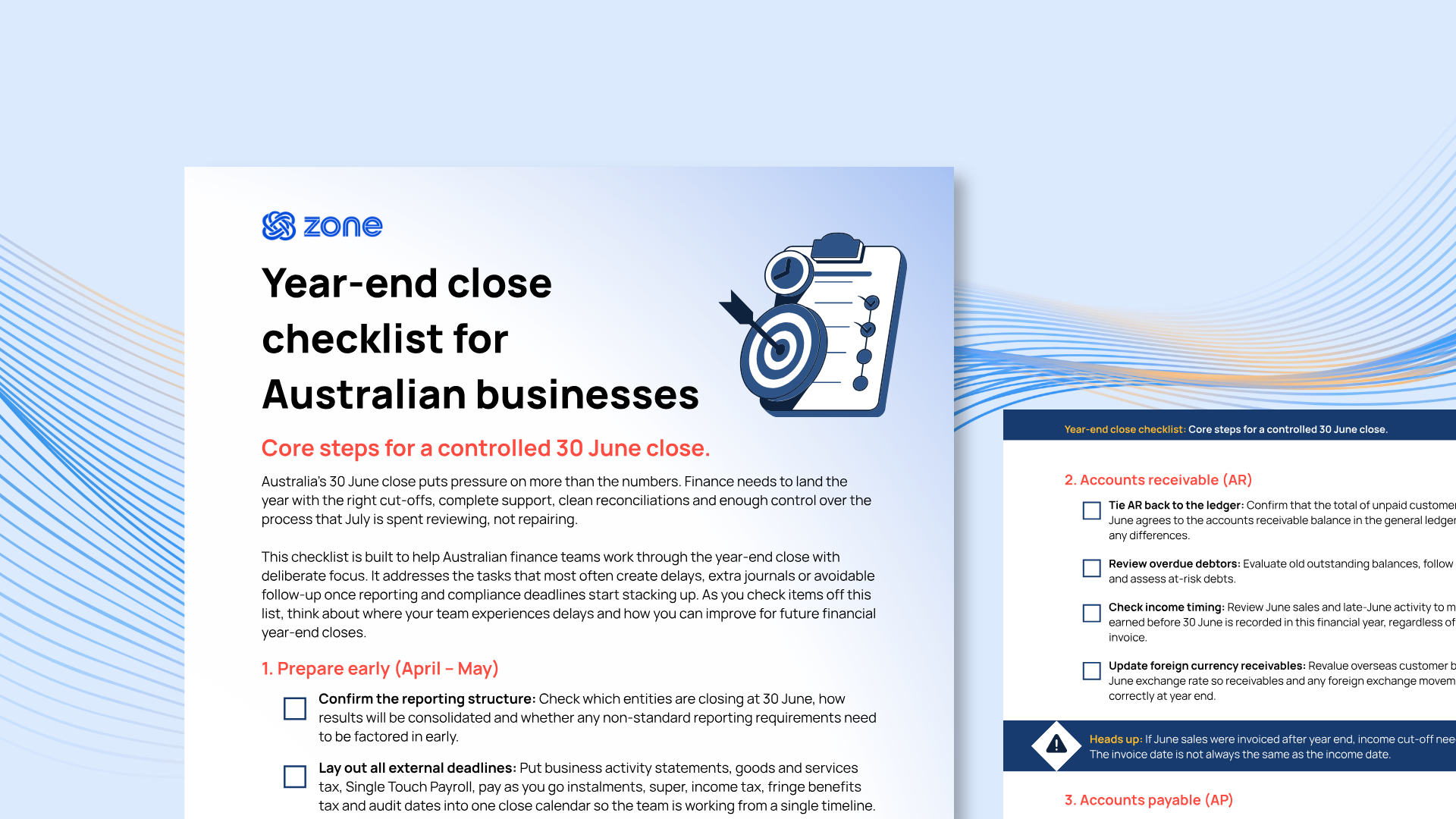
Download the checklist today for a faster year-end close.


Get a Personalized Demo Today
Start a conversation with an expert who asks thoughtful questions and shows you how Zone & Co can solve your unique problem.